
Strengthening Regional Capacity in Erongo Through the EU EIA Project
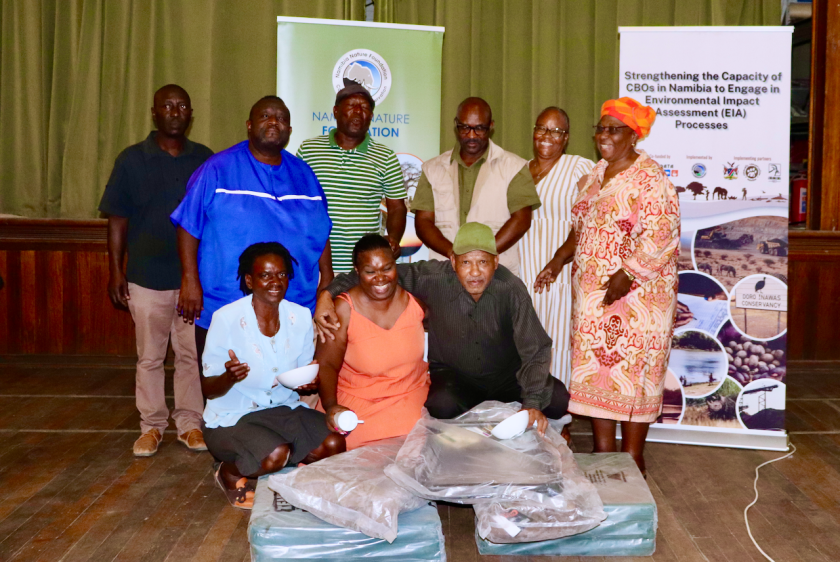
The Erongo Regional Association has received essential camping equipment through support facilitated by the Namibian Association of CBNRM Support Organisations (NACSO) in collaboration with the EU-funded project, Strengthening the Capacity of Community-Based Organisations in Namibia to Engage in Environmental Impact Assessment (EIA) Processes. This practical investment forms part of the project’s broader commitment to strengthening regional environmental governance and improving the effectiveness of community-based natural resource management structures across Namibia.
The project aims to ensure that communities can actively and effectively participate in decisions affecting their land and natural resources. Running from December 2024 to November 2027 in the Kavango, Kunene South, and Erongo regions, the project builds the technical, legal, and institutional capacity of Community-Based Organisations through training, simplified educational materials, environmental legal support, advocacy tools, and multi-stakeholder dialogue. By strengthening community engagement in EIA processes, the project promotes inclusive environmental governance and supports sustainable economic growth that safeguards Namibia’s essential natural resources for tourism and rural livelihoods.
Erongo’s landscape is both striking and complex. From the rugged granite outcrops of the Erongo Mountains to expansive communal conservancies and arid plains, the region supports biodiversity, tourism, mining activities, and farming. It is also an area where communities face increasing pressures linked to climate variability, drought, and human-wildlife conflict. Effective coordination across vast and often remote areas is essential.
The newly provided camping equipment will enable association members to travel to remote conservancies and hold meetings directly within communities. Instead of relying on limited infrastructure or postponing engagements due to distance, members can now convene discussions on land-use planning, wildlife management, and conflict mitigation where it matters most. This improves communication, strengthens participation, and allows decisions to be made with input from those directly affected.
In the long term, the project seeks to strengthen resilient regional and community structures that can respond proactively to environmental and development pressures. By investing now in practical tools, technical knowledge, and institutional capacity, the project lays the foundation for stronger environmental governance, more balanced development decisions, improved conservation outcomes, and sustainable livelihoods for future generations.
This is how lasting environmental stewardship is built, through empowered communities and coordinated regional action.


